One of my earliest lessons (that I can remember) about money came from my parents. When I got my first real summer job (a step above lemonade stand), they created their own version of a company 401(k) match. If I saved part of my paycheck, they’d match a portion of it.
At the time, I thought they were simply encouraging me to save, but looking back, they were teaching me one of the most valuable financial lessons I’d ever learn: money grows best when you give it both time and consistency. Every summer, families sending their kids off to their first jobs have the opportunity to teach that same lesson.
A Summer Job Is About More Than a Paycheck
There’s something memorable about receiving your first paycheck. It’s magical, and then you notice taxes have been taken out! Suddenly, earning money feels a little more real.
Most teenagers immediately start thinking about what they can buy, like a used car, new clothes, or going-out money with friends. I don’t think that’s a bad thing. Enjoying some of what you’ve earned is part of learning the value of work. But it’s also the perfect opportunity to begin talking about saving and investing.
If your child wants that Switch 2, great. Let’s make a plan where some of the paycheck goes toward that goal, while another portion starts building something even bigger for the future.
Roth IRA for Kids – Time Is the Greatest Investment
If you’re not familiar with it, a Roth IRA for kids is simply a retirement account that allows minors with earned income, like money from a summer job, to begin investing long before most people ever think about retirement.
Contributions are made with after-tax dollars, and if the rules are followed, the money can grow tax-free for decades. Parents or grandparents can even help fund the account up to the amount the child earned that year.
The real advantage isn’t the amount invested early on, it’s giving compound interest an extra 40 or 50 years to do what it does best. Imagine someone who works summer jobs between the ages of 15 and 18 and contributes part of those earnings to a Roth IRA each year. Even if they never contributed another dollar after high school, those early investments could grow substantially simply because they had decades to compound.
In this example below, the child earns $5,000, spends half, saves half, and the parent matches the $2,500. Over the course of high school, a total of $20,000 was invested and left to compound until age 65. Obviously, investment results are not guaranteed, but over the last 50 years, the S&P 500 has achieved an annualized average return of approximately 11.85% when dividends are reinvested.
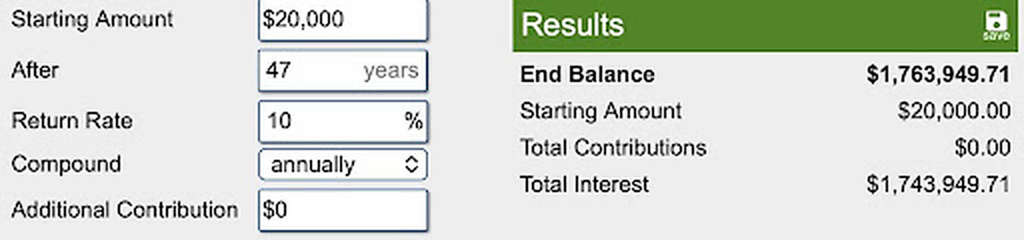
That’s the lesson I hear adults repeat all the time. “I wish I had started sooner.” It’s rarely about wishing they had invested more. It’s almost always about wishing they had started earlier.
One of my favorite parts of family financial planning is seeing generations learn from one another. Money lessons don’t always come from books or classrooms. They often come from family stories about mistakes, successes/opportunities, and the benefit of experience above all else.
Building Habits That Last a Lifetime
Whether your child is saving for college, a first car, or that gaming rig they’ve been dreaming about, every paycheck creates an opportunity to practice balance. Those habits will matter far more down the road than the dollar amount itself earned scooping ice cream.
If your child or grandchild has started earning income this summer, it may be the perfect time to explore Roth IRAs for kids. Book a call with me to learn how that can work.