There are two times of year when my family’s calendar feels completely out of control: the holidays… and the end of the school year. Between Mother’s Day, Memorial Day, spring sports, school concerts, birthday parties, and end-of-year events, the end of the school year almost has the same frantic energy/pace as December, just with warmer weather.
Then school lets out, and suddenly the challenge flips. Instead of trying to fit everything in, parents are trying to figure out how to fill twelve weeks without overscheduling—or underscheduling—their kids.
This year, Finn is 12, Rhys is 10, Boden is 7 and Isla is 4, and like many families, we’re balancing Merrowhawke Boat Camp, SummerQuest at Crane Estate, family vacations, summer sports, and leaving enough room for kids to still be kids.
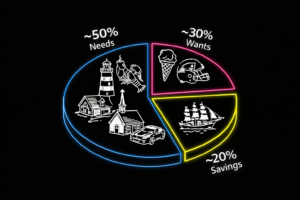
As my wife and I have been plotting our family summer, I realized it’s surprisingly similar to how I present asset allocation strategies to new clients or to established clients looking to reconfigure their finances in response to life events.
Every Family Needs a Different Balance
One thing parents quickly learn is that there isn’t a perfect summer schedule. Some kids thrive with every week planned. Others need downtime to recharge. Some love sports. Others would rather spend a day at the beach or exploring with friends. The goal isn’t to fill every minute; it’s to find the right balance for that particular child, as long as that balance isn’t entirely gaming and raiding the pantry for snacks all day.
Investing works the same way, and some clients ask me what the “best” portfolio looks like for any particular year, but that’s like asking what the perfect summer schedule is. It depends. Someone in their thirties raising young children has different needs than someone approaching retirement. Every family’s goals and comfort with risk are different, which is why I’ve never believed financial planning should be one-size-fits-all.
Diversification Isn’t Exciting…Until You Need It
During a stretch of beautiful weather, it’s easy to wonder why you planned indoor activities. Then it rains for four straight days, and suddenly you’re glad you had options. Diversification works much the same way. When one area of the market has been performing well for years, owning other asset classes can seem unnecessary. Then leadership changes, and markets rotate, before you know it, the conditions evolve; investments that once felt boring suddenly become the ones providing stability.
Diversification rarely gets the credit during good times, but that’s exactly when it’s quietly doing its job.
“All Set” Isn’t Always Optimized
There’s also a difference between having a summer plan and having one that can adapt. Someone gets sick. Camp gets canceled, and a rainy week changes everything. Good parenting means adjusting.
I’ve said it countless times, many people consider themselves “all set.” They have retirement accounts, investments, and savings. But are they still optimized?
Has their allocation drifted after several years of strong market performance? Do their investments still align with their goals, or are they simply reflecting what has performed well recently? Without a family financial planner, people who go the DIY financial planning route often find themselves in less-than-optimized positions because there’s no professional (outside perspective) to keep the path in clear sight.
Take a Moment to Check in This Summer
Just as every child benefits from a thoughtful balance of camps, vacations, sports, and downtime, every portfolio deserves an allocation built around the person it serves, not just around headlines or someone else’s plug-and-play strategy.
That’s what I’ve always tried to help families do. Do not chase perfection, don’t skip the summer vacation, but build a flexible plan that can adapt as life changes while staying focused on long-term goals.
If it’s been a while since you’ve reviewed your asset allocation strategies, give me a call, and we can talk about the best path forward for you and yours.